Manufacturing Cybersecurity: A Practical Guide to Protecting Production Systems
Understand the cyber threats facing UK manufacturers and the practical steps that can protect production systems, reduce downtime and strengthen IT and OT security.

Manufacturing cybersecurity has become one of the most pressing issues facing the sector. This is not because manufacturers necessarily hold more valuable data than banks or hospitals, but because they cannot afford prolonged downtime. A ransomware attack that stops a production line for even a few hours can cost far more than the ransom itself. That pressure can make manufacturers more likely to pay quickly and, in turn, more attractive to attackers.
The scale of the problem is clear. The NCSC's 2025 Annual Review lists manufacturing among the UK sectors reporting the most ransomware activity, alongside academia, finance and retail. A 2022 survey of UK manufacturers by Make UK and BlackBerry also found that over four in ten had experienced a cyber incident during the previous 12 months.
For most manufacturing businesses, cyber security was not designed with this level of pressure in mind. Many production environments were built around uptime and reliability rather than security. Attackers are learning how to exploit that gap.
What makes manufacturing cybersecurity different from typical IT security?
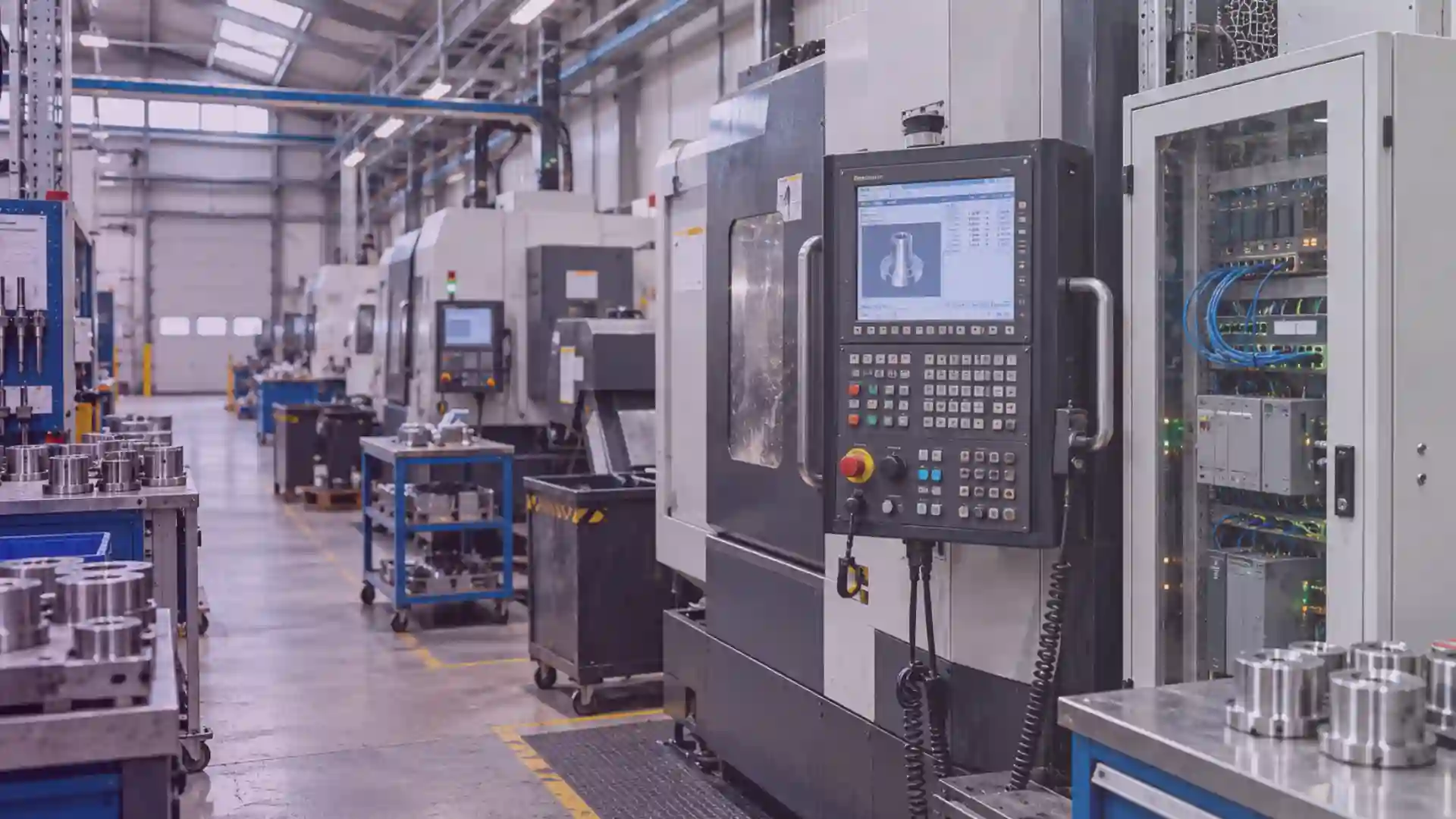
Most cyber security advice is written for office environments, covering email, laptops and cloud accounts. Manufacturing has all of this, but it also runs a second, often older, layer of technology: operational technology (OT). This includes the industrial control systems, sensors and machinery that run the plant floor.
Several factors make this environment harder to secure than a typical office network:
- Legacy equipment. Machinery on the plant floor may be 10, 15 or even 20 years old. It can run software that cannot be patched or updated without risking the equipment itself.
- Uptime pressure. Taking a system offline to apply a security fix has a direct and visible cost. Security work can therefore be deprioritised in favour of keeping production running.
- IT/OT convergence. As factories become more connected for monitoring, remote access and predictive maintenance, the separation between office IT systems and production OT systems has largely disappeared. A breach that starts with an email can now reach the machines making the product.
This combination creates a genuine risk, even where a manufacturer has taken the usual precautions. A good firewall and antivirus software on office laptops will not protect a 15-year-old PLC controlling a production line.
The most common attack vectors for manufacturers
Ransomware targeting production lines. Attackers target production and OT systems because disruption creates immediate operational and financial pressure. The longer production remains offline, the greater the incentive may be to pay.
Supply chain and third-party compromise. Manufacturers depend on a network of suppliers, contractors and equipment vendors, many of whom have some form of systems access. A supplier with weak security can become the route into a manufacturer's own environment.
Phishing leading to lateral movement. Many breaches still begin with a phishing email sent to someone on the office network. The greater damage happens when an attacker moves from a compromised account into production systems that have not been properly separated from it.
Unsecured remote access to industrial control systems. Remote maintenance and monitoring tools are useful, particularly where specialist engineers or vendors need access. However, access that is not tightly controlled can provide a direct route into OT systems.
Practical steps to reduce risk
Security in manufacturing does not have to mean removing and replacing every legacy system. Many of the most effective steps involve controlling access and containing risk rather than eliminating older equipment.
1. Segment IT and OT networks.
One of the most effective steps a manufacturer can take is to ensure that office IT systems and production OT systems do not sit on the same flat network. Proper segmentation helps prevent a breach in one environment from spreading automatically into the other.
2. Tighten third-party and vendor access.
Review who has remote access to systems, why they have it and whether it is still required. Time-limited, monitored access for vendors is safer than permanent connections left open indefinitely.
3. Train plant staff, not just office staff.
Security awareness training is usually designed for office workers. Plant floor teams face different risks, including USB devices, vendor laptops connected to machinery and physical access to control panels. Their training should reflect the environment in which they work.
4. Build an incident response plan that accounts for production downtime.
A generic IT incident response plan may assume that systems can simply be taken offline while an incident is investigated. That may not be realistic in manufacturing. The plan should address how the business will respond while maintaining critical production wherever it is safe and practical to do so.
5. Patch what you can, isolate what you cannot.
Not every piece of equipment on the plant floor can be updated without risking the machinery or interrupting production. Where patching is genuinely not possible, isolating the equipment on a segmented network is a practical way to reduce its exposure.
Where compliance fits in
For UK manufacturers, cyber security and compliance increasingly go hand in hand. Accreditations such as Cyber Essentials Plus and guidance from the National Cyber Security Centre (NCSC) provide a practical baseline relevant to small and mid-sized manufacturers, not only large enterprises. Frameworks such as ISO 27001 offer a more comprehensive structure for organisations that need to demonstrate security maturity to customers, insurers or regulators.
Getting these fundamentals right does more than reduce risk. It is increasingly important when winning and retaining contracts, particularly where larger customers examine the cyber security of businesses in their supply chain.
How Kanj Technologies helps
Kanj Technologies works with manufacturers to close the gap between IT and OT security. This can include network segmentation, third-party access controls and incident response plans that reflect the realities of a production environment.
The approach is based on the compliance frameworks that matter to customers, insurers and regulators, including Cyber Essentials Plus and ISO 27001. The aim is not to apply generic best practice, but to understand where technology creates operational risk and put proportionate controls around it.
If it is unclear where the greatest exposure sits, an assessment of the current IT and OT environment is usually the right place to start.
Frequently asked questions
Why is manufacturing a common target for cyber attacks?
Manufacturers are particularly sensitive to downtime. When production is disrupted, the cost rises quickly and creates pressure to restore operations. Legacy equipment and growing IT/OT connectivity can also create a wider attack surface than in a typical office environment.
What's the difference between IT security and OT security?
IT security protects office systems, including email, laptops and cloud accounts. OT, or operational technology, security protects the industrial control systems and machinery that run production. They require different controls but need to work together as factories become more connected.
Do smaller manufacturers need to worry about this, or is it just an issue for large enterprises?
Smaller manufacturers can be attractive targets because they often have fewer security resources than larger enterprises. They may also hold valuable intellectual property or form part of the supply chain of larger customers that expect suppliers to meet defined security standards